Emergency Dentist in Esztergom: When and Where to Seek Help
Severe toothache, sudden swelling or an accident can be frightening, particularly when it is difficult to judge urgency. An emergency dental assessment first aims to identify a dangerous condition, determine the cause of pain or infection and provide safe initial care. Not every problem can be completed in one appointment. Definitive root canal treatment, a crown or another reconstruction may require a return visit. When seeking care in Esztergom, confirm current availability on the Crown Dental clinic page.
Free emergency dental service and opening hours
Who is eligible, and when is the service free?
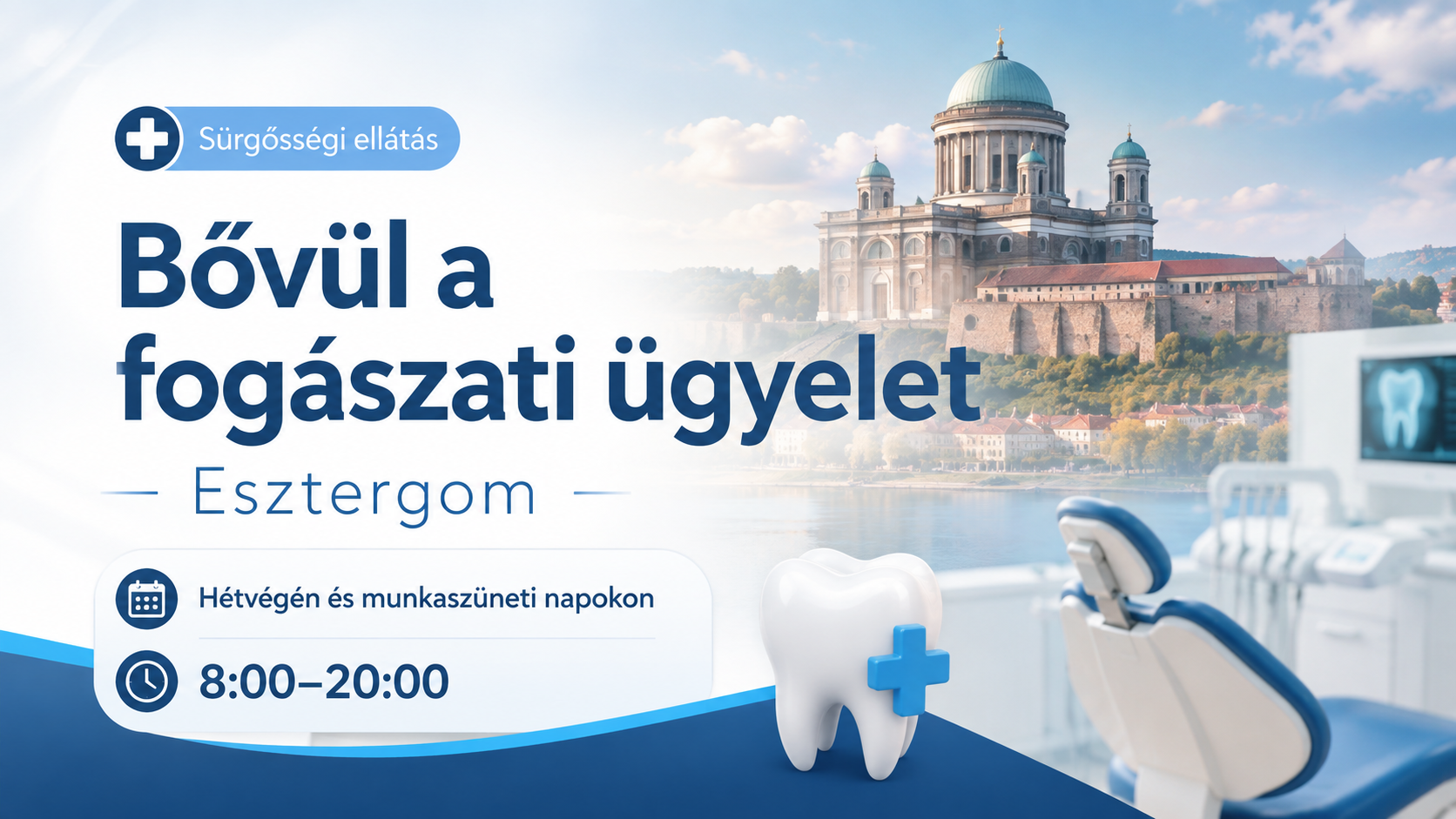
A free emergency dental service is available to residents of Esztergom on weekends and public holidays from 08:00 to 20:00.
The same free emergency dental service is available to residents of Tát, Bajót and Nyergesújfalu on weekends and public holidays from 14:00 to 20:00.
Crown Dental Esztergom opening hours
Monday–Friday: 09:00–18:00 Saturday–Sunday: 08:00–20:00
Important: general clinic opening hours are not the same as eligibility for the free emergency dental service. Free emergency care applies to residents of the listed municipalities during the stated time windows. Contact details are available on the Crown Dental Esztergom clinic page.
Which symptoms require prompt dental assessment?
Severe, night-time or throbbing pain, increasing gum or facial swelling, a fractured tooth, a tooth displaced by trauma, a lost filling with marked sensitivity, or a loose crown or bridge can justify early contact. Bleeding is particularly concerning when firm continuous pressure does not stop it. Pain intensity does not always reflect severity: a non-vital tooth may become temporarily quiet while infection develops around its root.
When should you not wait for a dental appointment?
Difficulty breathing or swallowing, rapidly spreading swelling of the face or neck, high fever with significant illness, a major jaw injury, uncontrolled bleeding or an accident involving loss of consciousness may require general emergency medical care. Do not rely only on an online dental booking in these situations. Contact the local emergency system or attend an appropriate emergency department.
What information should you give by phone?
- when the problem began and how it has changed;
- whether swelling, fever, bleeding or trauma is present;
- whether you can swallow and breathe normally;
- which medicines you take and any known allergies;
- whether the tooth has received previous treatment.
An accurate description helps the clinic judge priority and the time likely to be needed. The person on the phone cannot examine the tooth, so their response is not a diagnosis. Contact the service again if your condition deteriorates before the arranged appointment.
What happens at an emergency dental visit?
The dentist takes a focused history, examines the painful region and arranges an X-ray when indicated. They then explain the aim of care that day. Treatment might involve opening a tooth, placing a temporary seal, relieving an abnormal bite contact, smoothing a sharp edge, controlling bleeding or another first-aid measure. Antibiotics are not universal painkillers and do not replace local dental treatment. They should only be prescribed for an appropriate clinical indication.
What can you do safely while waiting?
Keep the area clean with gentle brushing and use short periods of external cooling for swelling. Take pain relief only in accordance with its label, your health conditions, other medicines and professional advice. Do not place aspirin, alcohol or a caustic substance on the gum, apply heat to swelling or use household glue on a crown. A knocked-out permanent tooth is especially time-sensitive; hold it by the crown and do not scrub the root.
What happens after first aid?
Urgent care should be followed by a clear continuation plan. This may include completing root canal treatment, placing a filling or crown, checking a wound, reviewing an extraction or discussing another way to retain or replace the tooth. Related options appear on the Crown Dental treatments page. If a tooth needs later replacement, the implant information can support that discussion.
Special situations: children, pregnancy and blood-thinning medicines
After a child's injury, it helps to know whether the tooth is primary or permanent, but uncertainty should not delay contact. Urgent dental care can also be necessary during pregnancy. State the stage of pregnancy and known risks so examination and medicines can be selected appropriately. Never stop an anticoagulant or antiplatelet medicine on your own, even when bleeding is present. Give its exact name and dose so the dentist can plan bleeding control and coordinate with the prescribing clinician when necessary.
Frequently asked questions about dental emergencies
Is every toothache an emergency?
Not every ache is immediately dangerous, but a new, worsening or sleep-disrupting symptom should not be postponed. Earlier assessment may preserve more treatment options.
Can swelling resolve on its own?
It may fluctuate temporarily, but a dental infection can spread without treatment. A dentist needs to evaluate its source.
Will I receive antibiotics?
Only if the dentist considers them clinically indicated from the symptoms and general condition. Many toothaches require local treatment instead of, or in addition to, medication.
What should I do with a lost crown?
Keep it safe, do not glue it back, avoid hard chewing on that side and arrange an examination. The tooth and restoration determine whether it can be recemented.
How much does emergency care cost?
The emergency dental service is free for Esztergom residents on weekends and public holidays from 08:00 to 20:00, and for residents of Tát, Bajót and Nyergesújfalu from 14:00 to 20:00. In other cases, Crown Dental's current official information and the diagnosis made at the visit determine the fee.
Do you have an acute dental problem in Esztergom? Check the clinic's current contact information. For an urgent but non-life-threatening problem, send a request through the online booking page; call or seek emergency medical help if symptoms are rapidly worsening.
Why is the weekend different?
Fewer clinics, laboratories and diagnostic services may be available, while the patient may already have spent hours attempting to manage the problem at home. The realistic goal is therefore often safe stabilisation: identifying the source of pain, assessing whether infection is spreading, protecting a damaged area and planning continuation on a working day. Without a clear explanation, a patient may wrongly assume that the emergency measure is already a final solution.
Which problems justify weekend contact?
Worsening pain or pain that prevents sleep, increasing swelling, trauma, a fractured or displaced tooth, persistent bleeding and a restoration that suddenly becomes unusable may justify prompt advice. A lost filling without pain can sometimes be protected briefly, but it still needs assessment because the inner tooth may be vulnerable. Urgency should not be judged from pain intensity alone.
When is general emergency care necessary?
Difficulty breathing, obstruction when swallowing, rapidly spreading facial or neck swelling, high fever with significant illness, a major facial injury, loss of consciousness or uncontrolled bleeding should not wait for a routine dental call-back. Contact the local emergency system. A dental emergency service and a hospital emergency department have different roles; a threat to the airway or life takes priority.
How should you prepare for weekend contact?
- note when the symptom began and how it changed;
- check whether you have a fever;
- prepare a list of medicines and allergies;
- mention trauma or earlier treatment to the tooth;
- verify the clinic's current official availability.
Brief and accurate information supports telephone triage. Opening hours shown in an old search result or social post may be outdated, so use the current Crown Dental clinic information. If there is no immediate reply and symptoms are deteriorating rapidly, do not simply continue waiting.
What can a weekend dentist provide?
After an examination and imaging when needed, the dentist determines a safe goal for the visit. This might involve opening the source of pain, placing a temporary filling, smoothing a sharp edge, controlling bleeding, beginning stabilisation of an injured tooth or another acute measure. Antibiotics are only appropriate for a valid indication and cannot replace treatment of the source. A final crown, bridge or complex root canal procedure often has to be completed later.
Safe waiting and unsafe home remedies
Keep the area gently clean, cool swelling externally for short periods and avoid chewing on the painful side. Use medicine only in line with its instructions and your medical circumstances. Do not place tablets directly against the gum, pierce or heat a swelling, or attach a restoration with household glue. These approaches can conceal progression or cause additional tissue damage.
After weekend first aid
Ask what was done, how long the solution is intended to remain temporary, which symptoms require further contact and when definitive treatment is due. Follow-up may be a filling, root canal procedure, crown, wound review or tooth-replacement consultation. The Crown Dental treatments overview introduces the main options, while the implant page covers implant planning. Current official information and the actual required procedure determine the cost.
How can the chance of a weekend problem be reduced?
Not every emergency is preventable, but postponed symptoms often worsen at the least convenient time. Before travel, a holiday or a long weekend, consider an assessment of a sensitive tooth, moving temporary restoration or repeatedly bleeding gum. After recent surgery or complex treatment, keep the clinic's contact details and written instructions available. Do not begin leftover antibiotics or alter regular medicines without advice. A preventive review cannot guarantee that nothing unexpected will happen, but it may stop a known, manageable problem from becoming severe over the weekend.
Frequently asked questions about weekend dentistry
Is the clinic open every weekend?
Crown Dental Esztergom is open Monday–Friday 09:00–18:00 and Saturday–Sunday 08:00–20:00. Eligibility for the free emergency dental service is separate and depends on residence and the applicable time window.
Can I book a weekend appointment online?
An online request may be submitted, but rapidly worsening symptoms require direct telephone or emergency contact.
Will definitive treatment be completed?
It depends on the case and available support. Removing danger and stabilising the problem often come first, with final treatment arranged later.
Does weekend treatment cost more?
The emergency dental service is free for Esztergom residents on weekends and public holidays from 08:00 to 20:00, and for residents of Tát, Bajót and Nyergesújfalu from 14:00 to 20:00. In other cases, the clinic's current official fee information applies.
Can a mild symptom wait until Monday?
That depends on its nature. If pain, swelling or general illness increases, obtain professional advice sooner rather than waiting.
Did a dental problem begin over the weekend? Check Crown Dental's current clinic availability. Send an online appointment request for a non-life-threatening concern, and seek urgent medical help for warning signs.
Let's take the first step towards your perfect smile!
Book an appointment for a specialist consultation where we answer all your questions and plan your new smile together.
Book Appointment